The Role of Filler Compatibility in PVC Compound Development
Filler selection is an important part of PVC compound development, particularly when manufacturers need to balance mechanical performance, dimensional stability, processing efficiency, and material cost. However, choosing a suitable filler is only one part of the process. Its compatibility with PVC resin and other formulation ingredients can determine whether the compound achieves the expected results. Even a filler with desirable individual properties may cause processing difficulties or weaken the finished product if it does not interact properly with the rest of the formulation. Fillers are commonly incorporated into PVC compounds to adjust stiffness, improve dimensional stability, modify surface characteristics, and control production costs. Calcium carbonate is widely used in many PVC applications, while other mineral fillers may be selected for specific functional requirements. The appropriate choice depends on the intended product, processing method, and required performance. Manufacturers should evaluate not only the filler type but also its particle size, surface characteristics, moisture content, and dispersion behavior before incorporating it into a formulation.
Compatibility begins with the interaction between the filler surface and the PVC matrix. Some fillers disperse more readily than others, depending on their surface properties and the characteristics of the surrounding ingredients. When compatibility is poor, filler particles may form agglomerates instead of distributing evenly throughout the compound. These clusters can create localized weaknesses, uneven surface finishes, and inconsistent mechanical properties. Effective dispersion is therefore essential for obtaining a uniform material structure. Particle size also influences filler performance. Fine particles can provide a large surface area and may contribute to improved uniformity when properly dispersed. However, smaller particles can also increase the tendency to agglomerate, making them more demanding to handle during mixing. Coarser particles may be easier to disperse under certain conditions but can affect surface smoothness and the mechanical behavior of the finished product. Selecting the right particle size requires balancing formulation objectives with practical processing conditions.
Surface treatment is another factor that can improve filler compatibility. Certain treated fillers are designed to enhance their interaction with polymer systems or improve their distribution during compounding. Depending on the treatment, these materials may offer better handling, reduced agglomeration, or improved compatibility with other formulation ingredients. Nevertheless, surface treatment should be evaluated in the context of the complete PVC formulation because its benefits depend on the resin, additives, and manufacturing method being used. The amount of filler added to a PVC compound also affects its overall performance. Increasing the filler loading may reduce raw-material costs and increase stiffness in some formulations, but excessive loading can create difficulties with fusion, flow, flexibility, or impact resistance. The compound may become more difficult to process, particularly when the filler is poorly dispersed or the formulation lacks sufficient lubrication. Manufacturers should therefore determine the appropriate loading level through formulation trials rather than relying on cost reduction alone.
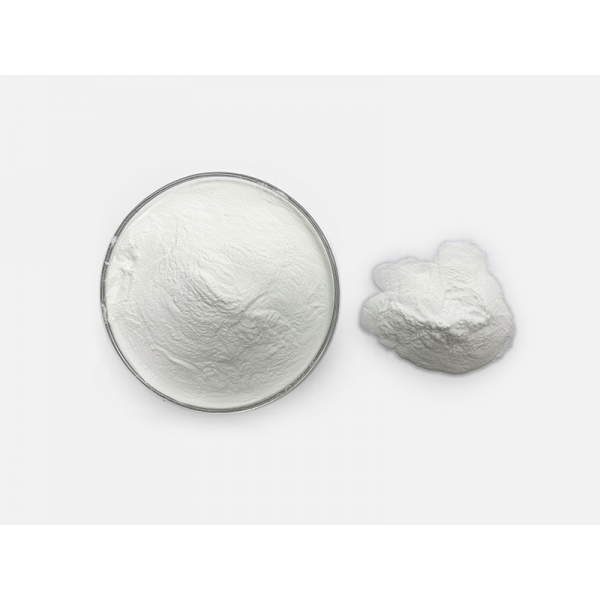
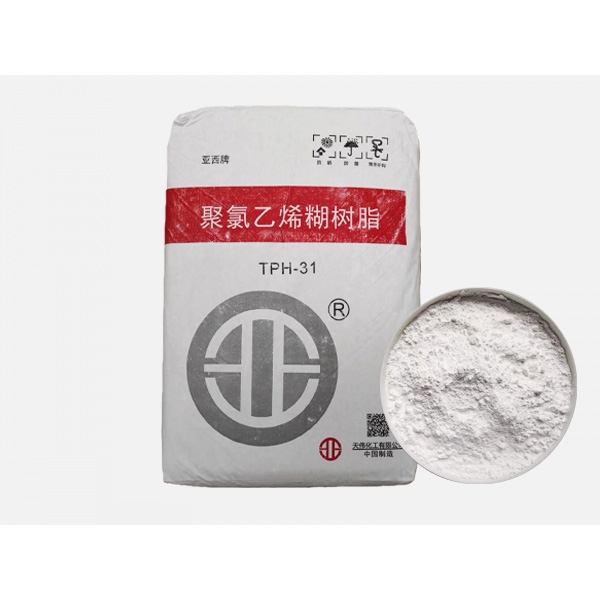
Filler compatibility must also be considered alongside plasticizers and lubricants. In flexible PVC, the filler may influence the distribution and behavior of the plasticizer, affecting softness and mechanical performance. Lubricants influence friction during processing and can affect how the compound fuses. If the filler loading changes, the existing lubricant balance may no longer be suitable. Adjusting the formulation as a complete system helps maintain stable processing while achieving the required final properties. Heat stabilizers are equally important when developing filler-containing PVC compounds. PVC requires suitable thermal protection during processing, and the presence of fillers can change the formulation's overall processing behavior. Manufacturers need to ensure that the stabilizer system remains appropriate for the selected resin, filler, and processing conditions. Consistent thermal stability helps reduce degradation-related problems and supports more predictable product quality.
Different manufacturing methods place different demands on filler compatibility. Extrusion requires a compound that can maintain stable flow and produce a consistent profile or sheet. Injection molding places additional emphasis on mold filling, surface appearance, and dimensional accuracy. Calendaring requires suitable fusion behavior and uniform material distribution across the finished sheet. A filler that performs well in one process may require adjustments when used in another, even if the basic PVC formulation is similar. Testing is essential for confirming whether a filler is suitable for a particular application. Manufacturers can evaluate dispersion, processing behavior, surface quality, hardness, tensile properties, impact resistance, and dimensional stability, depending on the product's requirements. Trial production can reveal issues that may not be apparent from raw-material specifications alone. By changing one formulation variable at a time, manufacturers can better identify how filler type, loading, particle size, or surface treatment affects the final compound.
At Jiangsu Pangrui New Materials Co., Ltd., PVC compound development can involve the coordinated selection of PVC resin powder, heat stabilizers, plasticizers, lubricants, pigments, and other formulation components. The company provides PVC formulation support and samples to help manufacturers assess materials for their production needs. When introducing a new filler, considering its compatibility with the existing formulation can help customers identify necessary adjustments before moving to larger-scale production. Ultimately, successful filler integration depends on more than the price or quantity of the material being added. Compatibility influences dispersion, processing stability, surface appearance, and the mechanical properties of the finished PVC product. By evaluating filler characteristics together with resin selection, additive balance, and manufacturing conditions, producers can develop compounds that meet their performance requirements without creating unnecessary processing challenges. A carefully optimized formulation provides a stronger foundation for consistent quality, efficient production, and long-term product reliability.