How PVC Formulations Influence Product Hardness
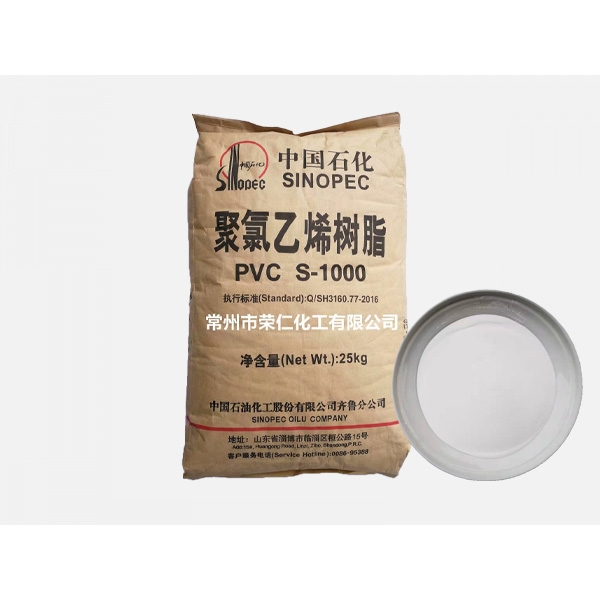
PVC formulations have a direct influence on the hardness of finished products, making formulation design an important part of achieving the right balance between rigidity, flexibility, durability, and processability. Although PVC resin provides the basic structure of the material, the final hardness is determined by how the resin interacts with plasticizers, stabilizers, lubricants, fillers, pigments, and other additives. A small change in formulation can therefore produce noticeable differences in the finished product. PVC resin is the starting point for hardness control. Different resin characteristics, including K-value and molecular structure, can influence fusion behavior and mechanical properties. Resin with suitable characteristics can provide a stable foundation for developing rigid or semi-rigid products. However, resin selection alone does not determine the final hardness. Manufacturers need to consider the complete formulation and the intended processing method before deciding which resin is most appropriate.
Plasticizer content is one of the most important factors affecting PVC hardness. Plasticizers increase the mobility of polymer chains, making PVC softer and more flexible. Increasing the plasticizer level generally lowers hardness, while reducing plasticizer content produces a harder material. The type of plasticizer also matters because different plasticizers can provide different levels of flexibility, compatibility, migration resistance, and long-term performance. Rigid PVC products usually contain little or no conventional plasticizer, allowing the PVC structure to provide greater stiffness. Pipes, profiles, sheets, and certain industrial components often require high dimensional stability and resistance to deformation. Flexible PVC products, on the other hand, use carefully controlled amounts of plasticizer to achieve the desired softness. The challenge is to reach the required hardness without sacrificing other important properties.
Fillers can also influence the hardness and stiffness of PVC compounds. Depending on their type, loading level, particle size, and dispersion, fillers may increase rigidity and dimensional stability. However, simply adding more filler does not always improve the final product. Excessive filler can affect impact strength, surface quality, processing behavior, and the consistency of the compound. Proper dispersion is therefore essential when fillers are used for hardness adjustment. Heat stabilizers have a different role but remain important to hardness consistency. PVC can experience thermal degradation during processing, and degradation may change the material's mechanical properties. A suitable heat stabilizer system helps protect the resin during heating and supports stable processing. Consistent thermal stability makes it easier to maintain similar hardness from one production batch to another.
Lubricants can influence the fusion and processing behavior of PVC, which indirectly affects the final material structure. The right lubricant system can help control friction and improve processing stability. However, excessive lubrication may interfere with fusion, while insufficient lubrication can create processing difficulties. Maintaining an appropriate balance helps manufacturers achieve a consistent material structure and predictable mechanical performance. Processing conditions should not be overlooked when controlling hardness. Mixing sequence, temperature, shear, fusion time, cooling conditions, and equipment settings can all influence how completely the PVC components form a uniform compound. Even when the raw-material ratios remain unchanged, inconsistent processing can result in variations in hardness, surface appearance, or dimensional stability.
Manufacturers should therefore define the required hardness before developing the formulation. A rigid construction profile, flexible sheet, cable component, flooring material, or industrial seal may each require a different hardness range. Other properties such as tensile strength, elongation, impact resistance, abrasion resistance, and thermal stability should be considered at the same time. Optimizing hardness in isolation can create problems elsewhere in the product. Testing is an important part of formulation development. Hardness measurements can be used to compare different formulations and determine whether adjustments are moving the material in the desired direction. Trial batches can also reveal how changes in resin, plasticizer, filler, or stabilizer levels affect processing and final performance. This approach is more reliable than making large-scale formulation changes without preliminary testing.
Jiangsu Pangrui New Materials Co., Ltd. provides PVC resin powder, plasticizers, heat stabilizers, lubricant microsphere foaming agents, pigments, optical brighteners, and related formulation support for PVC product development. By evaluating these materials as part of an integrated formulation, manufacturers can adjust hardness while also considering processing efficiency and the performance requirements of the finished product. Ultimately, PVC hardness is the result of formulation balance rather than a single ingredient. Resin establishes the foundation, while plasticizers, fillers, stabilizers, lubricants, and processing conditions determine how that foundation develops into the final material. By understanding the role of each component and testing the formulation under realistic production conditions, manufacturers can achieve more consistent hardness and develop PVC products suited to their specific application.